
1350 Blairs Ferry Road, Suite B Hiawatha, IA 52233 I 319-343-8540
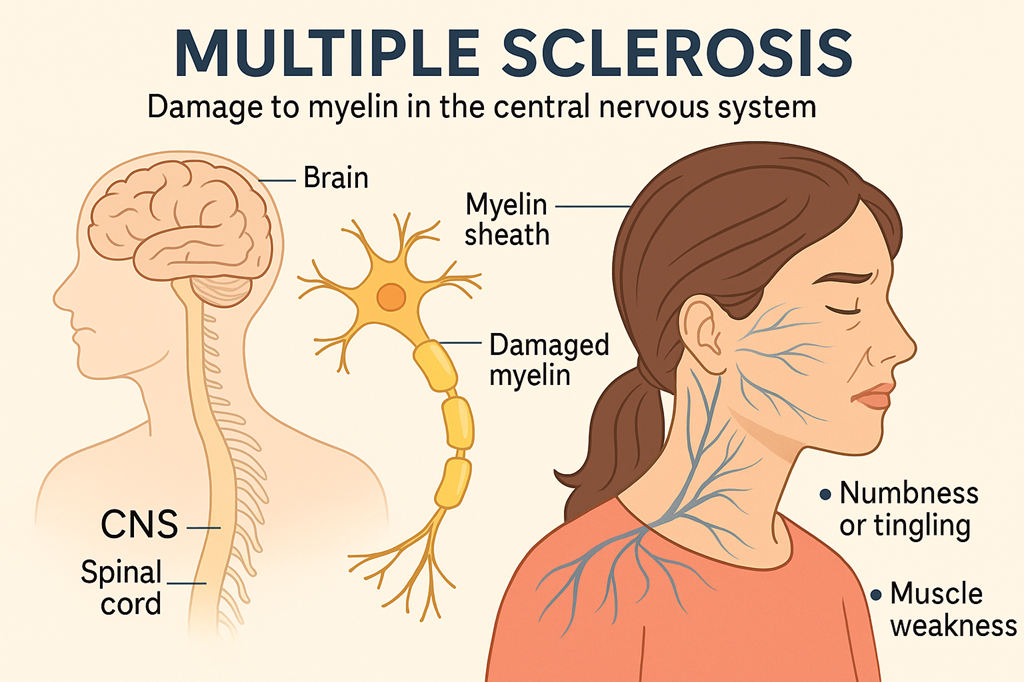
Multiple Sclerosis (MS)
Supporting Neurological Function Through Gentle, Precise Upper Cervical Chiropractic Care
Understanding Multiple Sclerosis (MS)
Multiple Sclerosis (MS) is a chronic, immune-mediated neurological condition where the body’s immune system mistakenly attacks the protective covering (myelin) around nerves in the brain and spinal cord.
This process disrupts communication within the central nervous system and can lead to a wide range of symptoms, including:
-Numbness or tingling
-Muscle weakness
-Balance or coordination problems
-Fatigue
-Blurred or double vision
-Dizziness or vertigo
-Cognitive changes or brain fog
-Muscle stiffness or spasticity
-Bladder or bowel issues
-Chronic pain
-Temperature sensitivity
MS presents differently from person to person and often progresses in flare-ups or episodes.
While upper cervical chiropractic care does not treat or cure MS, it can play a vital role in supporting the body’s neurological and structural function—helping many patients experience improved comfort, mobility, and overall quality of life.
Why the Upper Cervical Spine Matters in MS
The upper cervical spine—the atlas (C1) and axis (C2)—plays a crucial role in protecting the brainstem and influencing:
-Nervous system communication
-Autonomic balance
-Blood and cerebrospinal fluid (CSF) flow
-Structural stability
-Muscle tone
-Posture and movement patterns
Because MS involves neurological signaling, even slight misalignment in the upper neck can amplify or worsen sensory disturbances, balance issues, or muscle tension.
How Upper Cervical Misalignment May Influence MS Symptoms
When the atlas or axis shifts out of position, it may:
✔ Affect CSF flow
Disturbed flow can increase pressure around the brain and spinal cord, contributing to neurological irritation.
✔ Alter blood flow
Blood supply to the brainstem and cerebellum can become restricted, affecting balance, coordination, and cognitive clarity.
✔ Increase muscle tension
Abnormal nerve signaling can create tightness in the neck, upper back, and shoulders—common in those with MS.
✔ Disrupt brainstem communication
The brainstem regulates autonomic, sensory, and motor pathways—key areas impacted in MS.
✔ Exacerbate fatigue or sensory overload
Structural imbalance can heighten stress on an already sensitive nervous system.
Restoring proper alignment can reduce strain on the nervous system, allowing the body to function at a more optimal baseline.
What Research Suggests
While upper cervical chiropractic is not a treatment for MS, several case reports and observational studies have noted:
-Improved quality of life
-Better mobility and coordination
-Fewer musculoskeletal symptoms
-Reduced muscle tension
-Enhanced balance and posture
-Better energy levels
-Decreased frequency of secondary symptoms (neck pain, headaches, dizziness)
Early studies examining CSF flow and atlas alignment show promising potential—but more research is needed.
Your approach is safe, gentle, and supportive, giving MS patients an avenue for improved comfort and function.
How Upper Cervical Care Helps MS Patients at Atlas Specific Chiropractic
✔ Functional Neurological Scans (Tytron)
These non-invasive infrared nerve scans detect imbalance, inflammation, and stress on the autonomic nervous system.
✔ Precision 3-View Upper Cervical X-rays
Measured down to 1/100th of a degree and millimeter, these images identify the exact misalignment pattern of the atlas and axis.
✔ Gentle AHKC (Advanced HIO Knee-Chest) Technique
No twisting, cracking, or forceful manipulation.
Just a precise correction tailored to your anatomy.
✔ Ongoing Monitoring & Customized Care Plans
We focus on keeping your correction stable—not over-adjusting—which is especially important for individuals with neurological conditions.
Patients with MS frequently report improvements such as:
-Easier movement
-Better posture
-Reduced muscle tightness or spasticity
-Fewer headaches
-Greater energy
-Clearer thinking
-Improved sleep
-Better balance
Even small improvements can significantly enhance daily function and comfort.
What MS Patients Often Experience Before Seeking Upper Cervical Care
You may benefit from evaluation if you notice:
-Chronic neck stiffness or reduced mobility
-Dizziness or vertigo episodes
-Tingling or numbness that worsens with posture
-Fatigue after sitting or standing too long
-Head pressure or headaches
-Trouble with balance or coordination
-Increased discomfort during stress
-Ear fullness, ringing, or sensory overload
-TMJ tightness or jaw discomfort
These patterns often reflect upper cervical involvement, which can be gently corrected.
A Gentle, Supportive Approach for MSTake the Next Step Toward Relief
MS is a complex neurological condition—but improving alignment, reducing mechanical irritation, and supporting the nervous system can make a meaningful difference in daily life.
At Atlas Specific Chiropractic in Hiawatha, Iowa, we help individuals with MS support their stability, posture, nerve communication, and quality of life through gentle upper cervical chiropractic care.
📞 Call (319) 343-8540 or schedule your first visit today.