1350 Blairs Ferry Road, Suite B, Hiawatha, IA 52233 | (319)-343-8540
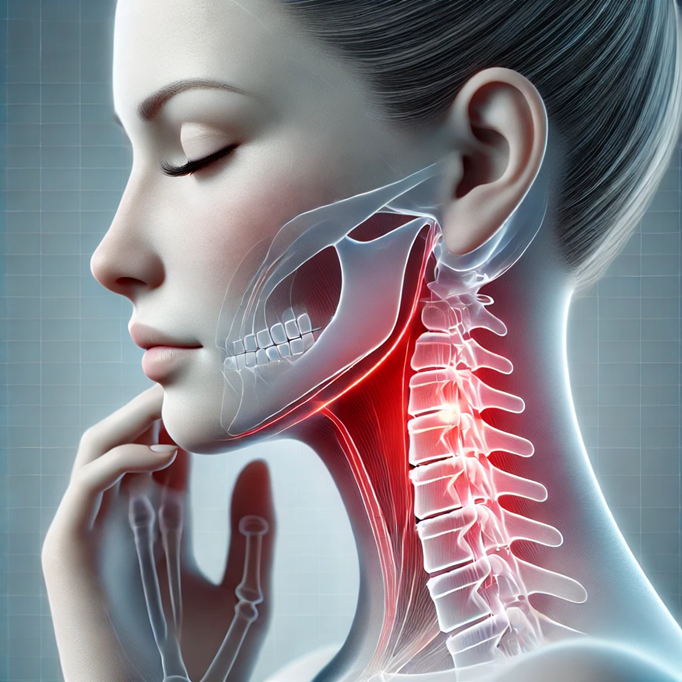
The Connection Between Atlas Misalignment and Jaw Pain

Do you experience jaw pain, clicking, or tightness that just won’t go away—no matter how many night guards, dentists, or pain relievers you try? If so, you’re not alone. Many people suffer from chronic jaw pain, often labeled TMJ, TMD, or jaw dysfunction, without ever identifying the real root of the problem.
What if the source of your jaw pain wasn’t your jaw at all?
At our upper cervical chiropractic office in Hiawatha, IA, we often find that persistent jaw pain is linked to an underlying issue in the upper neck, specifically a misalignment of the atlas vertebra (C1). Known as atlas subluxation, this subtle shift in the top bone of the spine can have major effects on the jaw, face, neck, and nervous system.
In this article, we’ll explain:
- What the atlas vertebra is and why it matters
- How atlas misalignment contributes to jaw pain and TMD
- The connection between the brainstem, jaw function, and facial nerves
- How upper cervical chiropractic care offers a natural, lasting solution
- What to expect from care with an atlas chiropractor near you
Understanding the Atlas Vertebra and Its Role in Jaw Function
The atlas vertebra, also called C1, is the top bone in your spinal column. It supports the head, enables a wide range of head motion, and most importantly—it surrounds and protects the brainstem.
The atlas is also located in very close proximity to:
- The trigeminal nerve, which controls facial sensation and chewing muscles
- The vagus nerve, which impacts digestion and systemic regulation
- The spinal accessory nerve, which helps control neck and shoulder muscles
When the atlas is even slightly misaligned—a condition known as atlas subluxation—it can put pressure on surrounding nerves and tissues. This pressure may lead to:
- Tightness in jaw and facial muscles
- Misfiring of the trigeminal nerve
- Compensations in the temporomandibular joint (TMJ)
- Jaw misalignment, clicking, or grinding
In other words, a misaligned atlas can disrupt the very neurology that controls your jaw—leading to pain, tightness, headaches, and even ear symptoms.
What Is TMD and How Does It Relate to Atlas Misalignment?
Temporomandibular joint disorder (TMD) refers to a collection of symptoms related to dysfunction in the TMJ, the hinge joint that connects the jawbone to the skull.
Symptoms of TMD often include:
- Jaw pain or tightness
- Clicking or popping sounds
- Difficulty opening or closing the mouth
- Pain while chewing or talking
- Facial pain or headaches
- Ear pressure or fullness
- Neck and shoulder tension
TMD can stem from many causes—trauma, grinding, arthritis—but one overlooked factor is neurological and structural imbalance from atlas misalignment.
In our Hiawatha upper cervical chiropractic clinic, we frequently see patients who’ve tried splints, mouth guards, or even jaw surgery—without success. Once we correct the atlas vertebra alignment, however, their jaw tension and pain often begin to improve, sometimes dramatically.
Why Atlas Misalignment Affects the Jaw: The Neurological Connection
The trigeminal nerve is the primary nerve involved in jaw movement and facial sensation. It emerges near the brainstem, which sits at the level of the C1 vertebra. When the atlas is misaligned, it can irritate or compress this nerve, leading to symptoms like:
- Facial pain
- Tight chewing muscles
- Numbness or tingling
- TMJ inflammation or locking
In addition, the muscles that control jaw movement—such as the masseter, temporalis, and pterygoid muscles—often become tense when the neck is misaligned. This tension creates further pressure on the TMJ, exacerbating dysfunction.
Signs You May Have Atlas Misalignment
If you’re experiencing jaw pain alongside other symptoms, it may be time to consider an atlas evaluation. Common signs of atlas misalignment include:
Chronic neck pain or stiffness
Frequent migraines or headaches
Ear pain, pressure, or fullness
Vertigo or dizziness
Clicking or popping jaw
One shoulder sitting higher than the other
A history of concussion, whiplash, or head trauma
Even mild injuries or years of forward head posture from screen use can contribute to upper cervical misalignment, especially at the atlas (C1) level.
How Upper Cervical Chiropractic Helps with Jaw Pain
Unlike traditional chiropractic care, upper cervical chiropractic focuses exclusively on correcting the alignment of the atlas and axis (C1 and C2) vertebrae. These precise adjustments restore balance to the head, neck, jaw, and nervous system.
At our Hiawatha IA upper cervical chiropractic clinic, we use the Advanced HIO technique—a gentle, highly specific method that requires no twisting or cracking.
Here’s what makes our approach different:
✅ Atlas-specific adjustments based on detailed spinal imaging
✅ Infrared thermography scans to assess nervous system stress
✅ Tytron scans to monitor your healing over time
✅ Advanced diagnostic imaging for spinal health
✅ Patient-centered, non-invasive care for long-term relief
What to Expect from Atlas Chiropractic Care
At your first visit, we’ll conduct a full chiropractic wellness evaluation, including:
- A consultation to understand your jaw symptoms
- A posture analysis and spinal examination
- Advanced imaging to evaluate your atlas bone alignment
- Functional nervous system scans (such as infrared thermography)
Based on your findings, we’ll create a customized care plan that addresses both neurological function and jaw stability.
As we correct the misalignment of the atlas vertebra, patients often report:
- Less jaw tension
- Reduced clicking or popping
- Fewer headaches and facial pain
- Better bite alignment
- Overall improved comfort and jaw mobility
We Help Complex Jaw Pain Cases Others Won’t Touch
Many chiropractors hesitate to work with patients who have complex conditions like:
- Jaw pain post-surgery
- Ehlers-Danlos Syndrome (EDS)
- Botox injection history
- Atlas fusions or upper cervical surgeries
- Chiari malformations
But at our Hiawatha chiropractic office, we’re trained in handling delicate neurological and structural presentations. We provide non-invasive chiropractic solutions for even the most sensitive cases.
Why Patients Travel to Our Office for Jaw Pain Relief
We are one of only a few upper cervical chiropractors in Iowa, and the only practice in this region offering the Advanced HIO technique. Patients regularly visit us from:
- Cedar Rapids
- Davenport
- Independence
- Maquoketa
- North Liberty
- Coralville
- Iowa City
- Burlington
- Kalona
- Center Point
- Muscatine
- Marion
- And across Eastern Iowa
They come because traditional jaw treatments haven’t worked—and because we offer a different approach rooted in brainstem connection and nervous system care.
Final Thoughts: Don’t Overlook the Atlas
If you’ve been dealing with chronic jaw pain, TMD, or TMJ dysfunction without answers, it’s time to look beyond the jaw. An atlas misalignment could be the real cause—and upper cervical chiropractic care might be the solution you’ve been searching for.
Let our team in Hiawatha IA upper cervical chiropractic help you discover a natural, lasting path to relief.
📞 Call (319)-343-8540 or schedule your first visit today!
Related Articles:
Chiropractic Care for TMJ Pain: An Upper Cervical Perspective
How the Upper Cervical Spine Affects the Jaw: TMJ, TMD, Jaw Dysfunction, and Jaw Pain
Addressing Occipital Neuralgia Through Atlas Realignment
Relieving Neck and Shoulder Pain Through Upper Cervical Adjustments
Upper Cervical Chiropractic Approaches to Trigeminal Neuralgia